

This is a special article from thependulumcometh, the first entry in his newsletter called The Pendulum Swings. You can find all of his writing on his Substack, The Pendulum Swings! And follow him on BlueSky, @thependulumcometh.bsky.social.
Welcome to the very first article from The Pendulum Swings, the newsletter that seeks to discuss how electorates across the country are changing, and what that might mean for both parties going forward! Well, “newsletter” might be a bit of a stretch at this point, but still very much a space to promote candid discussion of the ever-evolving state of electoral politics across the Union, from sea to shining sea (all for less than $35 a month).
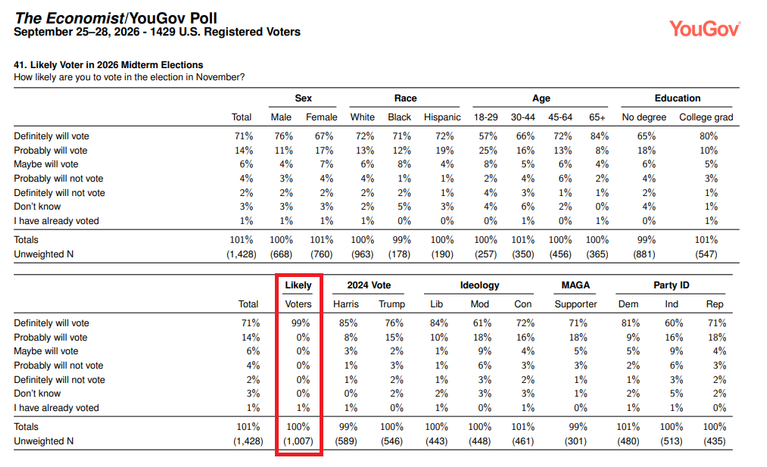
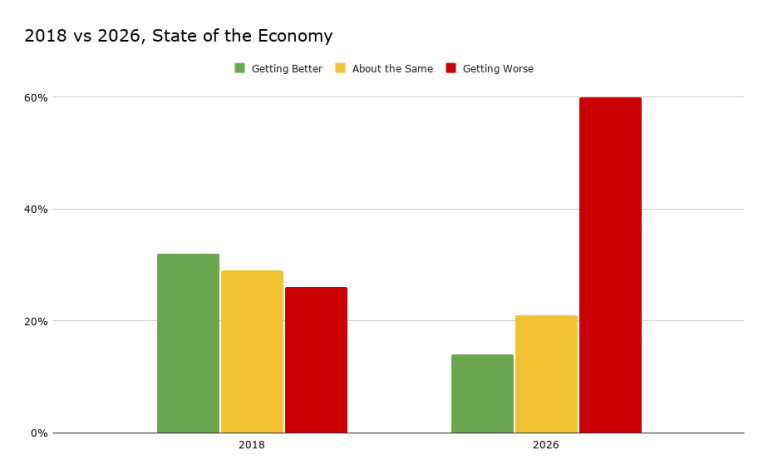
As of the date that this post is uploaded, we are currently less than 90 days away from the 2026 midterm elections. To anyone who has been keeping track of the current cycle, it appears that Republicans will head into November with what is likely to be their most dire prospects for retaining power since the midterm wave of 2018. This is mainly due to the sweeping unpopularity of the current administration’s actions since Trump’s inauguration. By treating the presidency and an initial positive approval as a mandate to do whatever he pleased, Trump has been able to accomplish what many, including yours truly, have previously thought to be impossible: getting close to George Bush (post-Hurricane Katrina) levels of unpopularity.
But what is even more surprising is that a further look under the hood paints a picture that is nothing short of terrifying for Republicans. Looking at over 100 special elections across the country during the 2025-2026 cycle (via The Downballot), as well as some recent high-quality polling showing Democrats with double-digit leads, Republicans may face an electoral environment that would be their worst since 1974, when Watergate took place. Much of this is due not only to antagonizing independents and energizing Democrats, but also to demoralizing the traditional high-propensity GOP base that has saved Republicans from further damage in prior midterms. This has not gone unnoticed by Democrats, as they are targeting a wide variety of districts that voted for Trump by high single-digit to low double-digit margins, such as North Carolina’s 11th, Iowa’s 2nd, and Florida’s 7th congressional district, all of which voted for Trump by a margin of 10-12 points.
But despite these already quite lofty targets, I believe several House seats are even more Republican than these, yet still have the potential to be similarly competitive. These are the kinds of seats where even discussing the prospect of them flipping would, at best, be met with uproarious laughter from all sides of the aisle. Well, in this series, we will cover such seats.
Before we dive in, I want to list the criteria I used for determining this list. Firstly, and most importantly, each of these seats must be rated as solid/safe Republican by at least 3 prominent election forecasters. Second, I only chose seats that have their final nominees in place, or at least have presumptive nominees in place before primaries take place (with one exception I plan to discuss very soon). Lastly, the districts featured on this list have at least one condition that noticeably makes them more competitive than someone would initially think. So something like a weak incumbent, a particularly strong challenger, a local issue making things interesting, etc. With that said, let’s get started.
I wanted to start with one that has genuinely surprised me for not being mentioned much in the conversation surrounding the possibility of a flip from red to blue. Though this might be in part due to the process it took to get to the point of being one to watch in the first place.
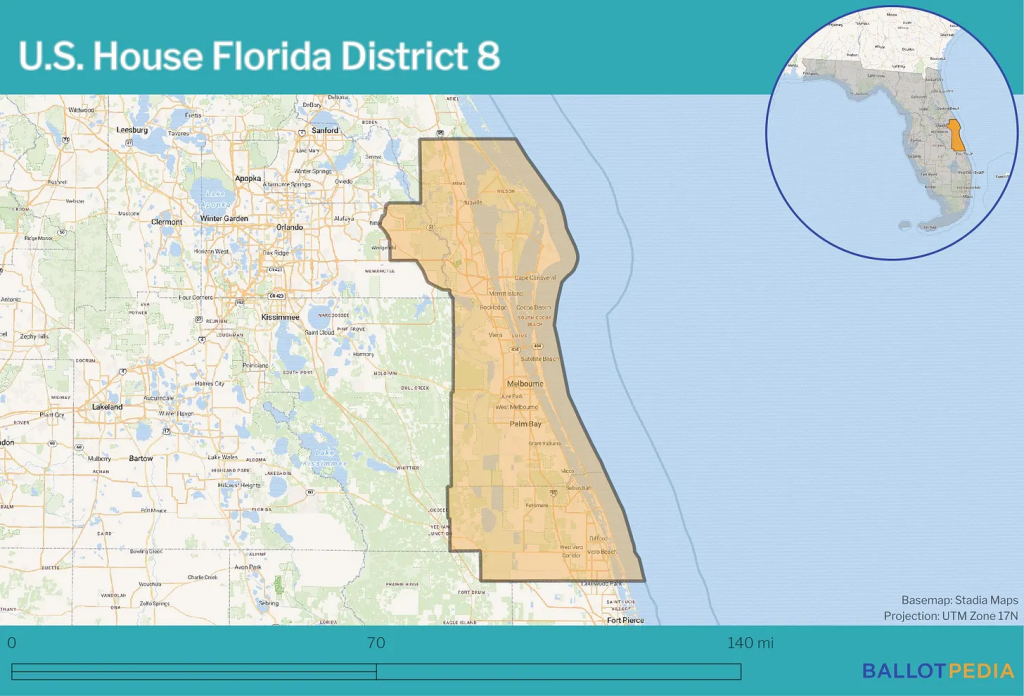
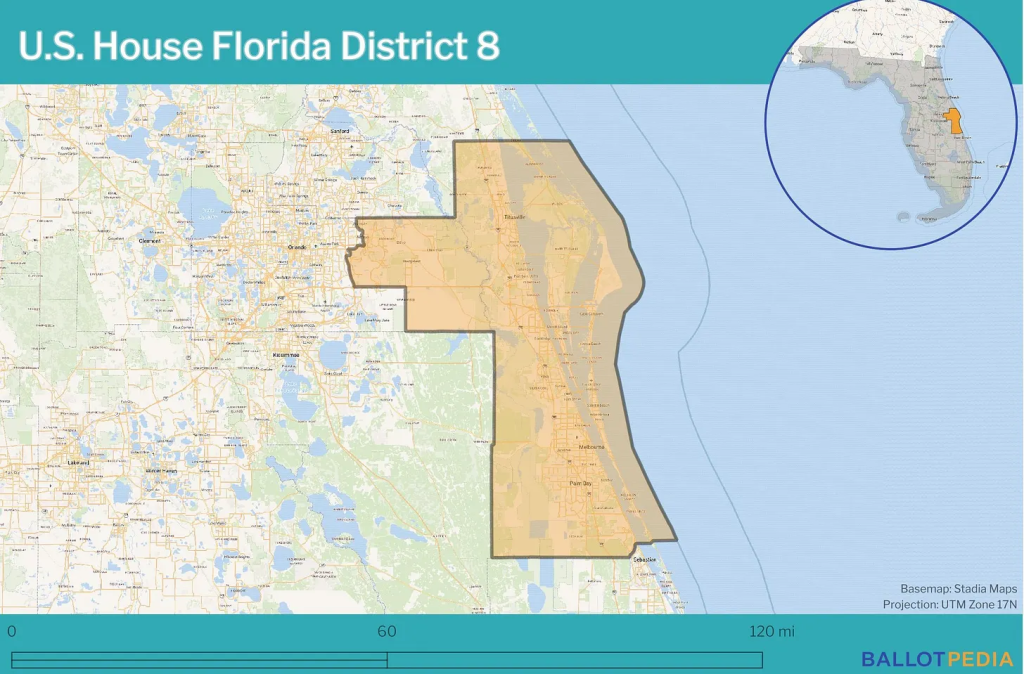
Traditionally, Florida’s 8th district has almost solely contained a region of the state known as the “Space Coast,” where the Cape Canaveral metropolitan area is located. This area is contained within the confines of Brevard County and some of Indian River County. Other areas that the district has usually encompassed include the following major municipalities: Cocoa Beach, Melbourne (home to the Florida Institute of Technology), Titusville, and Palm Bay. On the whole, Brevard County is quite red, voting for Trump by a margin of 20 points in 2024, 7 points more than what he won statewide. On the presidential level, Brevard County was last won by a democrat in 1976, with Jimmy Carter carrying it by 2 points. As a testament to how much Brevard County determines the voting behavior of the district as a whole, Trump won Florida’s 8th by 22 points in 2024.
Though much of this can be attributed to this county being much whiter than the bluer parts of Florida, as well as educational attainment not being as high compared to areas such as Tampa or Gainesville, the biggest reason can be attributed to this district having communities that attract many retirees. While not as much of a hub as Florida’s West Coast cities like Fort Myers and Naples, 41% of the county’s age demographics consist of Baby Boomers or Silent Generation residents. This has made progress toward winning congressional districts that have contained this area very difficult, as the last time this region of Florida was represented by a democrat in the House was, fittingly, with former Columbia Space Shuttle payload specialist and United States Senator Bill Nelson.
Making this district an even tougher lift is not only the historically Republican nature of the area, but also the incumbent Mike Haridopolos. Originally starting as a community college professor teaching history at Eastern Florida State College, he made his jump into state politics in 2000, when he was the state representative for Florida’s 30th House District and then later became a state senator for Florida’s 26th Senate District just three years later. In 2006, he became the majority whip of the State Senate, and soon became the Senate president in 2010, presiding over the largest Republican majority in the state Senate since the beginning of Reconstruction. He then retired from the state senate in 2012 to run against Senator Bill Nelson (yes, the same one from earlier), only to then lose in the Republican primary to Connie Mack IV. Haridopolos would take a break from politics for the next decade, working as a lobbyist for a consulting firm he owned and writing a book chronicling the rise of the Republican Party in Florida. But Haridopolos would make his return in 2024, when incumbent Representative Bill Posey would retire after serving 8 terms in Congress. Haridopolos did not face any real opposition in the Republican primary, winning 72% of the vote, and he would go on to win the general by 25 points, outperforming Trump in a year when the Republican presidential candidate has performed the best for their party since George H.W Bush in 1988. Needless to say, he’s reasonably well-liked in the area.

So why is this district even on the list to begin with? Well, it would not have been, had it not been for two distinct factors that have upended the race in a more competitive direction: the recently gerrymandered map changing the traditional makeup of this district, and the presumptive democratic nominee for this district.
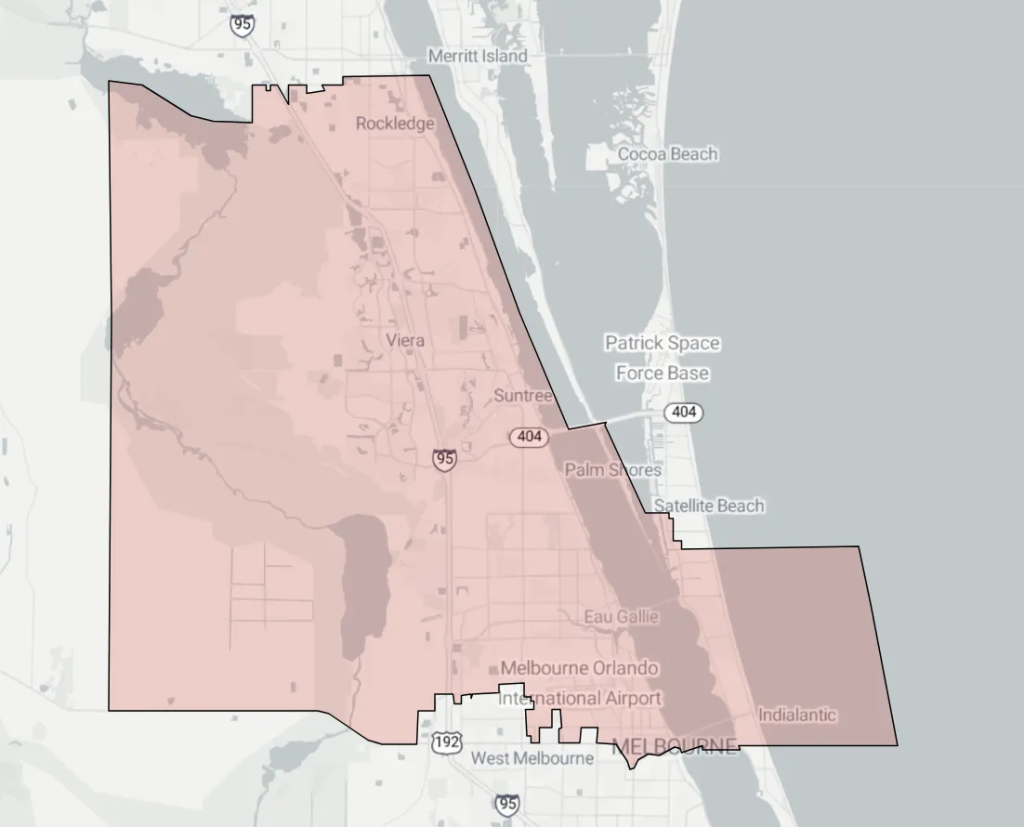
Starting with the first, the newly redistricted congressional map that Gov. DeSantis signed on May 4th of this year has turned the 2022 congressional map, which was a pretty egregious gerrymander in its own right, into a monstrosity that flagrantly insults the idea of fair representation. Diluting two dem districts in South Florida (FL-22 and FL-25) and two dem districts in the Tampa metro (FL-09 and FL-14), Republicans in the state legislature introduced many red areas from neighboring Red districts into these blue house seats while also changing the boundaries so that they can concentrate as many deep blue areas as they can into singular districts, diluting the power that these democratic cores have in fairly selecting a representative. But this strategy risks diluting strongly Republican districts of their Republican votes, making them much less red than they originally would be. This is what happened to FL-08, as it went from a district that Trump won by 22 points to one that he won by 16. That still would make it a district that regularly votes for Republicans. But given the sheer unpopularity of the administration (even in Florida), as well as the newly gerrymandered map being based on partisan data from a particularly good year for Republicans in the Sunshine State (the 2024 presidential election), this district has the distinct possibility of being much less red than would initially appear. Going by 2020 numbers, where Joe Biden lost the state as a whole by 3, the current version of the district only went to Trump by around an 11-point margin. So, still pretty solidly Republican, but one that could theoretically be in reach if things continue to get worse for Republicans (which, let’s be honest, is about as likely as there being a rainy day in Seattle). Spoiler alert for future entries in this series, but because of this gerrymander, this will not be the only time that congressional districts in Florida will make an appearance.
With the second, this is one I am very excited to discuss, as Dems did an excellent job with candidate recruitment here. The democrat running against Haridopolos is former U.S Senate candidate Jennifer Jenkins. From the very beginning of her political career, she has been embroiled in very tough fights and has been very successful in areas that are toxic to Democrats. Initially working as a Speech Language Pathologist, Jenkins often had to supplement her income by delivering groceries to help make ends meet. She made her jump into politics in 2020, when she ran for the 3rd district for Brevard County’s Public Schools Board. What made her race notable was her opponent, then-incumbent Tina Descovic, the co-founder of the infamous education advocacy group Moms for Liberty. Though this was technically a non-partisan race, it became clear which candidate represented what party as the race went on. With Descovic a rather well-known conservative firebrand in a staunchly Republican area during a year where ticket-splitting was very low, you would think that this would be a slam-dunk for Republicans. However, through fierce campaigning fueled by grassroots mobilization, Jenkins’ inspiring story and strength as a candidate, as well as some weaknesses from Descovic, she pulled off the upset against one of the most prominent conservative figures in Brevard County. This caused such a stir that Brevard County officials actually gerrymandered (yes, you read that correctly) her school board district (credit to Matthew Isbell of MCI Maps).

Additionally, she’s hitting all the right issues that can win crossover voters. Though initially getting some flak from shifting from running for Senate to Randy Fine’s district (FL-06) to FL-08, earning her the nickname “Jumpin’ Jenkins” by Republicans. Looking through Jenkins’ campaign website and social media, she has been speaking at length about issues regarding affordability, inflation, healthcare, and education. Florida has been suffering from multiple issues regarding the cost of living, especially regarding property insurance, so this will be a particularly salient talking point. She has even recently started bringing up Haridopolos’ position on data centers, which has caused a lot of ire amongst voters regardless of their political affiliation. On the other hand, the main message that Republicans are throwing at her right now is calling her a lefty whacko, a carpetbagger, and comparing her appearance to that of a trans social media personality.
But don’t just take my word for this; recent data has shown that this race has great potential to be competitive. An internal poll by the Jenkins campaign shows a pre-informed survey having her down 44% to 35%. That might not seem impressive, but that translates to a 7% overperformance of the 2024 margin. Not a bad place to start as a baseline. And though post-bio numbers aren’t super informative, it’s worth noting that her vote share increases by 9 and Haridopolos’ decreases by 3, with many of these gains being from independents and women voters. Given the fundraising disparity between them, with Haridopolos having 10x the cash on hand at the moment, this makes that all the more impressive.
But I wasn’t even really going to bring up this internal since I assumed it was just there as fundraising fodder. Many Democrats from districts ranging from tied districts to Trump +18 are showing similar types of modest leads in order to garner more campaign cash. However, something strange happened soon after that poll dropped. The Haridopolos camp released their own internal figures, with initial numbers showing him leading by 9 points as well, 51-42. After an informed ballot, Haridopolos leads Jenkins 55-37. Now I tried looking for details on this poll, but I haven’t found anything aside from the sample being composed of likely voters and the dates it was fielded being July 27th to the 29th. No mention of methodology, weighting, or even the sample size of the poll. If anyone has any additional information regarding this poll, I would be more than happy to hear more.
For a supposedly safely red district, what would be the point of even releasing this poll in the first place? For fundraising purposes? Possible, but considering how congressional GOP campaign finance organizations and outside pro-GOP groups are flush with cash, it likely isn’t worth the trouble of commissioning a poll for this purpose. Instead, based on the timing of it all, it might be a sign that the Haridopolos campaign recognizes they are in a real race. Now usually, the other side typically releases internal polls (especially that soon after) when they want to dispute a narrative, and this move fits that to a T. Now, I don’t want to read too much into this. After all, campaigns release internals all the time for one reason or another without any regard to the state of the race. But the fact remains that they still made this move to push out an internal poll that has no additional details other than a rosy picture of where Haridopolos is at right after the Jenkins’ campaign released their own.
So, Jenkins is a strong fit for the district, and is supposedly doing decently despite being at a financial disadvantage. Still, ever since Trump took office in 2025, there is precedent for democratic campaigns in this area punching above their weight despite having little financial or even institutional support. In June of 2025, a special election was held for Florida State House District 32, a district stretching from Rockledge to the upper part of Melbourne. This was a Trump+20 district, similar to the earlier iteration of FL-08. However, despite being massively outspent and out-organized (Dems reportedly did not really try in this race), the final result ended up being R+11, a 9% overperformance of 2024. Now, special elections aren’t 100% indicative of how an area will vote in a higher-turnout election taking place in November, but there is definitely fertile ground in this area for Democrats.
Overall, Florida’s 8th Congressional District is a race that has all the ingredients for an underrated but tangible flip opportunity. As the district is less red and the Democrats are putting up an excellent candidate, and with everything currently pointing to a great election night for Democrats this November, this is one that should certainly not be left for grabs. As such, if you wish to donate to the Jenkins campaign, here is the link to do so: https://secure.actblue.com/donate/jj-web-2026?refcode=header
Acknowledgements: I wanted to give major credit to Matthew Isbell of Mapping Florida/MCI Maps and The Downballot, as I used their information in the creation of this article.
About the Author