

Written by: David Crowley Stan (formerly Sheldon Whitehouse Stan)
Recently, there’s been a lot of discourse about Democrats struggling in blue states, even as a lot of swing state/red state polling looks like a blue tsunami. Some have gone as far as to deny the blue state polling, or deny the red state polling altogether. My argument? Both can coexist, and we can look back at recent midterm cycles to prove this.
Let’s start by looking at Oregon and Minnesota. By now you have no doubt seen the middling polling in both states for Democrats, with Klobuchar and Flanagan appearing to be in closer-than-expected races and Tina Kotek outright losing to her opponent in a poll. Let me be clear, I don’t think Democrats will lose any of these races. But they could also be closer than expected.
In Minnesota, outgoing Governor Tim Walz is fairly unpopular at this point, dogged by accusations that he didn’t do enough to combat a Medicaid fraud scandal. A governor as unpopular as Walz is can definitely impact the candidates running after them. A reminder that Connecticut Governor Ned Lamont barely won in 2018 with a plurality victory because his predecessor was unbelievably unpopular. It is easy to see how Klobuchar, running to replace Walz, and Flanagan, who served as Walz’s Lieutenant Governor, could be hurt by Walz’s low approval ratings even in a huge wave.
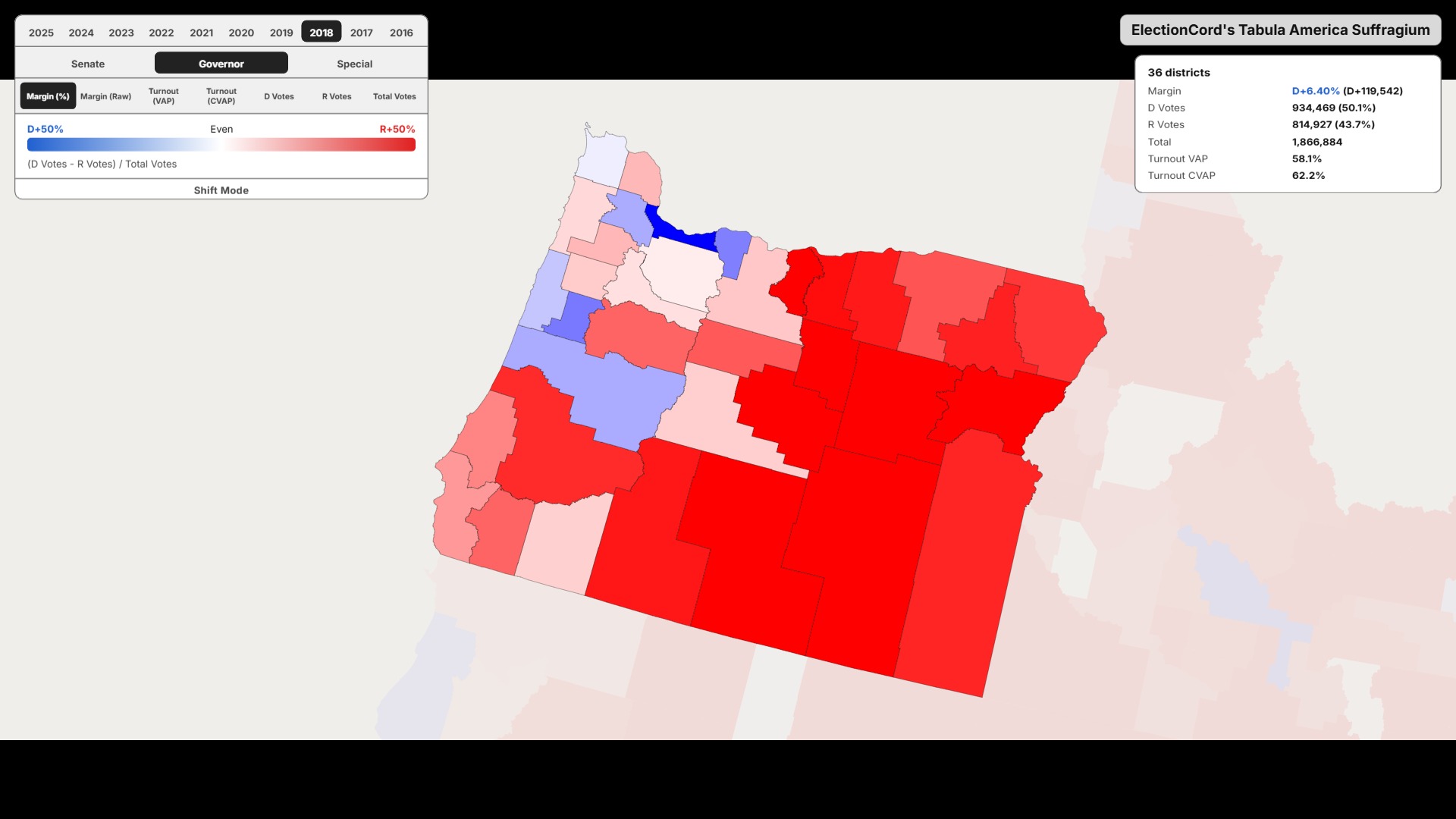
In Oregon, many have seen the recent poll with Christine Drazen, leading Tina Kotek, which has caused disbelief amongst many people given how the environment seems to be shaping up. Kotek is very unpopular here, with a 38% approval rating. But back in 2018, Kate Brown only beat her Republican opponent Knute Buehler by 6.4%. In fact, even though Democrats have held the Governor’s mansion the entire century, the most they’ve won it by is about 8%! These close margins, even in wave elections, are not abnormal.
Meanwhile, in Iowa and Alaska, the same phenomenon has played out but in the other direction, benefiting Democrats. The incumbent governors, Mike Dunleavy and Kim Reynolds, are both unpopular because of some issues related to their state budget and education policies. As a result, the Democrats vying to replace them are heavily favored. Combine that with tariffs hurting the farm economy in Iowa, and oil prices in Alaska, it is easy to see why the Senate races in those states are also competitive. On top of this, Alaska and Iowa are states with tiny populations; huge swings in those states are a drop in the bucket when compared to swings in the overall generic ballot.
Gubernatorial races are also far less polarized and more vulnerable to big swings. You don’t have to look far to find Republican governors like Phil Scott and Kelly Ayotte overseeing states that largely vote for Democrats at the presidential level, and governors like Andy Beshear who governs reliably red Kentucky. At some level, voters understand the difference between federal and local races and will act accordingly, as we are seeing particularly in Iowa right now. In a state that Donald Trump won by 13 points, Zach Lahn has not led in a poll once all cycle.
In short, some states will swing more than others. But this cycle is not an anomaly in that sense; it is just par for the course.
About the Author