

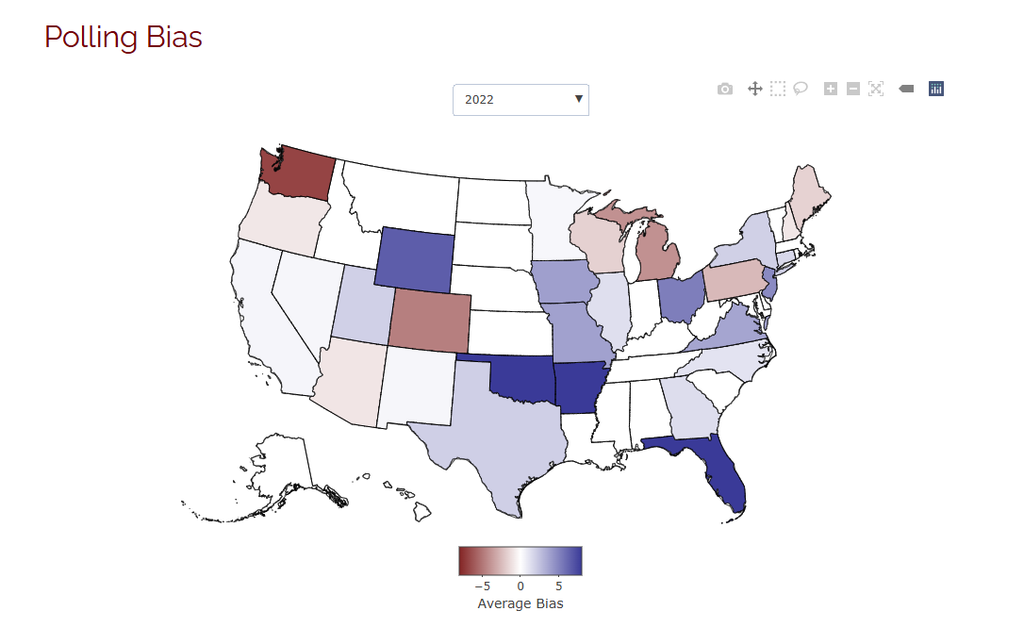
As we are just over one week out from Election Day, polls are flying around everywhere. People are also reacting to them in many different ways, from happiness, to fear, to mild optimism. One fairly persistent trend I have seen though, is people trying to project polling misses for both Democrats and Republicans. Polls aren’t perfect, and there have been instances of them getting it wrong. In 2025, Mikie Sherrill won the Governor’s race in New Jersey by just under 15%, despite polls saying she would win, but only by about 5%. In 2020, polling averages had Biden winning Wisconsin by over 6%, yet he only won it by 0.6%. Perhaps most infamously in recent memory, Selzer, the gold standard of Iowa polling, had Harris winning Iowa by 3% in 2024, yet she ended up losing it by double digits. The polling averages in Iowa weren’t great either.
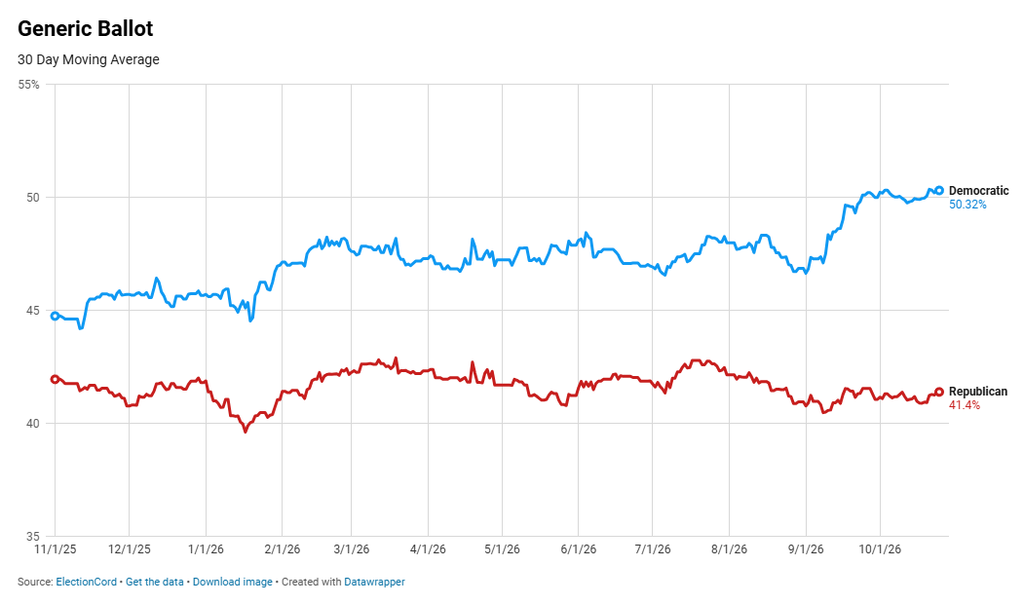
With that being said, there’s no guarantee that polling misses will happen. According to RealClearPolitics, 2022 was virtually spot-on, and 2018 was also within 2%. It’s very possible that our Generic Ballot average of D+9 is more or less correct.
But just for curiosity’s sake, let’s examine why a polling miss could happen for both Democrats and Republicans.
The Case For a Polling Miss Favoring Democrats
The main concern I have seen among some is the fact that the way some pollsters weigh could indirectly benefit Republicans. In short, polls will rarely use the raw sample and just release it. They will usually weigh certain groups to make sure that the overall poll’s demographics and political habits reflect the district or state they’re polling. It’s a very good way to make sure polls will be in the ballpark, but it isn’t perfect. It can, at times, lead to past election results influencing future predictions, in ways that may not be correct. The most notable case of this would be weighing by recall vote. Basically, pollsters will use how people voted in previous elections to make sure that the election they are polling will reflect that. So for 2026 polls, pollsters are using the 2024 President’s race, and potentially the 2020 President’s race, to get a sample that reflects how that state/district voted in 2024.
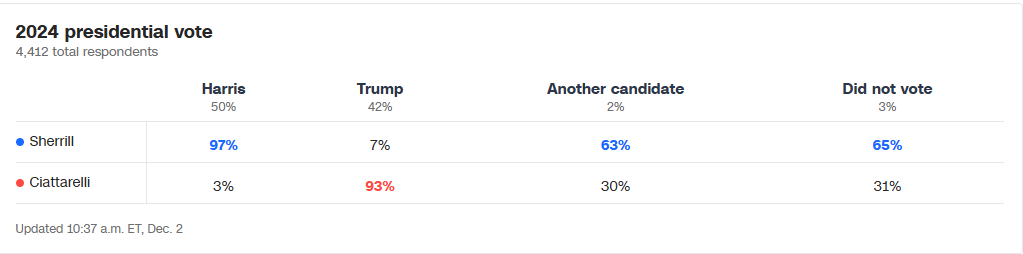
The main problem with this, is the same electorates don’t come out and vote every year! Just as a concrete example, Harris won New Jersey by about 6%, but CNN’s 2025 exit poll estimated that out of the people that voted, they voted for Harris by 8%. 2% doesn’t seem like a huge difference, but it could certainly mean the difference in close races. Because Democratic enthusiasm is expected to be high, it’s likely the electorate won’t have voted for Trump by the 1.5% margin he got in 2024. Maybe Harris will even have won out of everyone that voted!
Not all pollsters do this though, which leads me into the other reason why polls could see a miss in favor of the Democrats: underweighing demographics that have a history of low turnout. For the Democrats, this would basically be young people, and minorities, particularly Hispanics. This especially shows up in Likely Voter screens, compared to Registered Voter screens. For instance, Marist’s poll in Texas showed that Likely Voters were 41% non-white, and 39% under 45, and Registered Voters were 44% non-white, and 41% under 45. Again, it doesn’t seem like a huge difference, but these are groups that are expected to shift back to Democrats after shifting to Trump in 2024, according to our polling averages, and the 2025 election results. It could lead to Talarico winning by 6 instead of 2 as the polls say, and the Texas Governor’s race essentially being tied.
The Case for a Polling Miss Favoring Republicans
I will let Chaz Nuttycombe, pollster and Executive Director at StateNavigate share his thoughts:
It has been true that in Presidential years, polls have underestimated Trump and Republicans, in part because of this. Republicans simply seem less likely to want to answer polls, and you can see that in a lot of unweighed samples. For instance, the unweighed sample in a YouGov poll of Ohio from late September had 58% of voters saying they voted for Harris in 2024! Even under the absolute best circumstances, there is no way that you’d get close to that number. The poll weighs it so voters ended up voting for Trump by 10%, but it is still a concern that Republicans just do not want to answer polls, and Democrats are more inclined to.
Why is this? Part of it seems to be because college-educated people tend to answer polls more often, and college-educated people also tend to be more Democratic leaning. Per Natalie Jackson on X (Twitter) “Problem in the last ~10 yrs: Education polarization transformed a non-problem into a major problem that favors one side.” Is it possible that pollsters could go too far and overestimate how the actual electorate in 2026 voted in 2024? Of course, we discussed that in the Democrats section. Polling misses also can be varied from state to state. According to Jacob Long, while places like Texas and Georgia have typically seen accurate results, Ohio and Iowa have consistently seen polling errors in favor of Republicans, so it isn’t far-fetched to think it could happen again.
Conclusion:
It’s basically impossible to predict polling misses, if it was, you’d see pollsters and people smarter than me say it. Also, the margin of error certainly exists! Since it is just a poll, and the sample size can only be so large, there is naturally a margin that pollsters plainly state the results could be in. While it depends on the sample size, it typically is between 2-4%. So, let’s say a poll had a Republican winning by 1%, and the Democrat ends up winning by 1%. While it would be unfortunate for the pollster, they also weren’t “wrong”, since it was within the margin of error. No matter what happens though with any poll, as we say, just chuck it into the average.
Resources:
https://web.archive.org/web/20260222164008/https://fiftyplusone.news/polls/governor/general/new-jersey
https://www.realclearpolling.com/polls/state-of-the-union/2018/generic-congressional-vote
https://www.realclearpolling.com/polls/state-of-the-union/2022/generic-congressional-vote
https://www.cnn.com/election/2025/exit-polls/new-jersey/general/governor/0
https://maristpoll.marist.edu/wp-content/uploads/2026/10/Marist-Poll_TX-NOS-and-Tables_202610131056%5Eal3j7.pdf
https://d3nkl3psvxxpe9.cloudfront.net/documents/ttw_oh_20260921_lv.pdf
https://x.com/nataliemj10/status/2114751767187538333?s=20
About the Author