

As we near the end of the Major League Baseball season, I have become more and more depressed about an inevitable lockout by the owners. To describe the MLBPA vs. owners dispute, many pundits use the term “millionaires vs. billionaires” to describe the negotiations that are about to take place. Indeed, both the players and the owners have it pretty good relative to most Americans, but the phrase encapsulates the kinds of intra-elite fights that tend to show up now and again.
Right now, American political spending can also be described as a fight between millionaires and billionaires. On one side, the Republican Party has become heavily dependent on large donations, often from billionaires or large corporate donor groups. On the other, the Democratic Party fundraising machine has become the domain of the less-wealthy, but still tremendously wealthy upper class.
The billionaires largely give via Political Action Committee (PAC) spending, sending money to party committees or funneling money into a nonprofit that then spends via “dark money”. We are not a campaign finance site, but it’s not hard to see how three billionaires spending $600 million is helping Republicans stay afloat in campaigns across the country.
Meanwhile, Democrats love donating money to campaigns. And these aren’t small donations either: Dems like Jon Ossoff and James Talarico are often earning the maximum FEC contribution sum ($3,500) from thousands of individuals. Sherrod Brown, Abdul El-Sayed, and Mary Peltola aren’t far behind either. This adds up very quickly. Talarico has raised a preposterous $122 million in individual contributions so far. There is also a huge number of small donations (under $50) going to Dem candidates, as always.
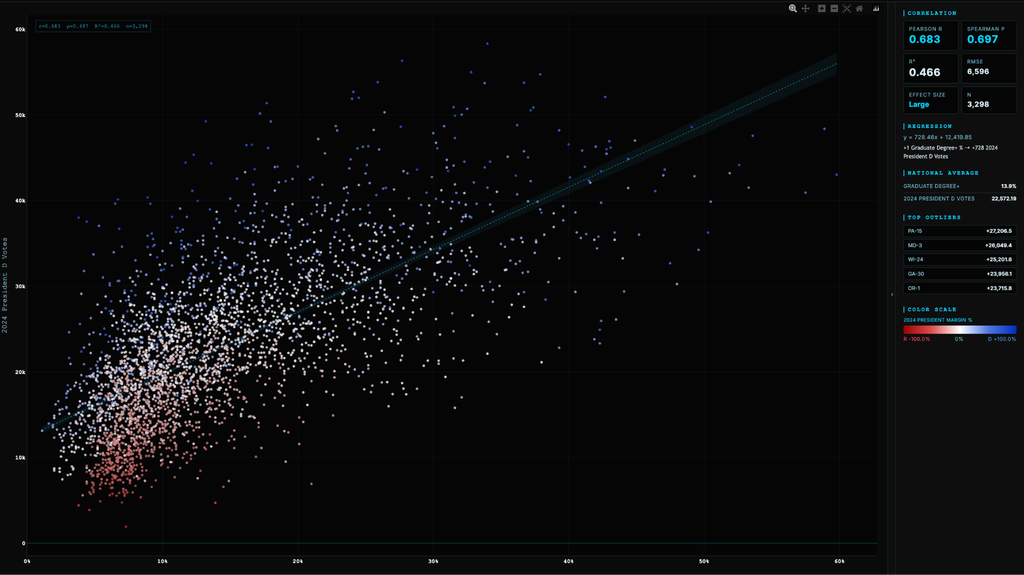
Now, it’s worth noting who has the disposable income and energy to spend thousands of dollars on a political campaign for someone running thousands of miles away. These are not going to be lower-income or less-educated people. What you’re seeing is the impact of 10 years of Democrats gaining ground with voters with a college degree or better. Indeed, Democrats currently lead post-graduates by a resounding 58/30 margin.
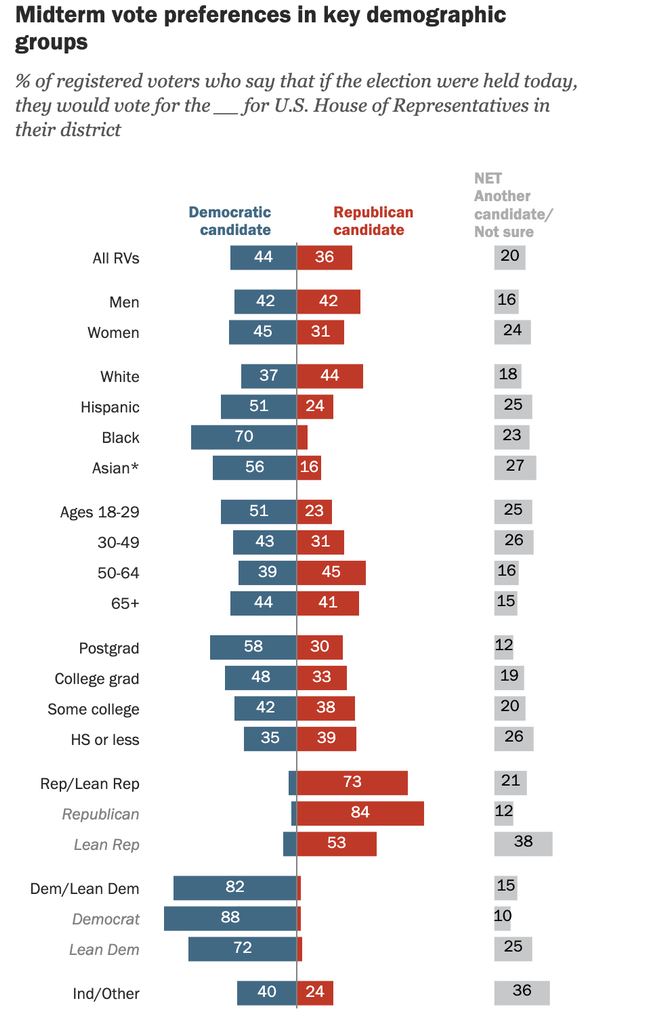
On the 2012 exit poll, postgrads voted just 55/42 for Obama.
These increasingly older postgrads are the millionaires fighting the billionaires in donations, protesting, and generally keeping the Democratic Party afloat.
On our Charta program, the correlation between the number of 2024 Dem votes in a 100K district and the rate of post-graduate degree holders is R^2 = 0.683.
It works. This fundraising machine has led to some stark campaign spending gaps between Democratic and Republican candidates, where Dems utterly crush Republicans on candidate spending. Yet every day, reports show that Republican candidates’ ad and campaign spending dwarfs Democratic candidates’, due to billionaire donors. However, this spending is often wildly inefficient. Outside groups have to largely buy ads at a higher rate than candidates, and, frankly, their ads are also worse than candidate ads. There are also some Democratic outside groups led by George Soros, the Pritzker family, and some other well-off liberals who often decline to be named, but they pale in comparison to the money cannon from liberal advanced-degree holders. One also wonders how much endless headlines of Musk buying elections turn off the average small-dollar Republican donor. Why bother donating this year if the billionaires are picking up the tab?
Democrats are also likelier to be politically engaged at the level of society that makes big donations. According to Pew, just 9% of the population can be classified as a “Mobilizer”, or people who “volunteer, attend local government meetings, donate to political causes, follow the news closely and attend religious services at high rates…they are by far the most likely to do things like volunteer for campaigns and contact elected officials.”
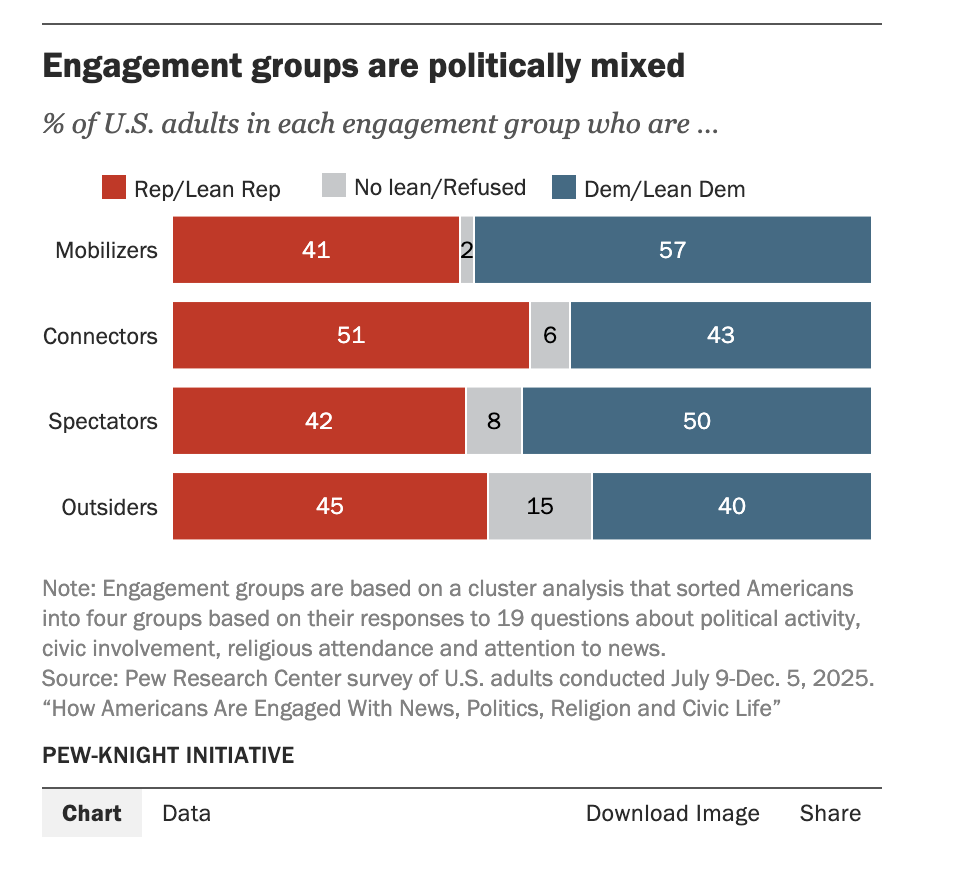
Indeed, that D+16 Mobilizer cohort just does more with civic life than any other group in American society.
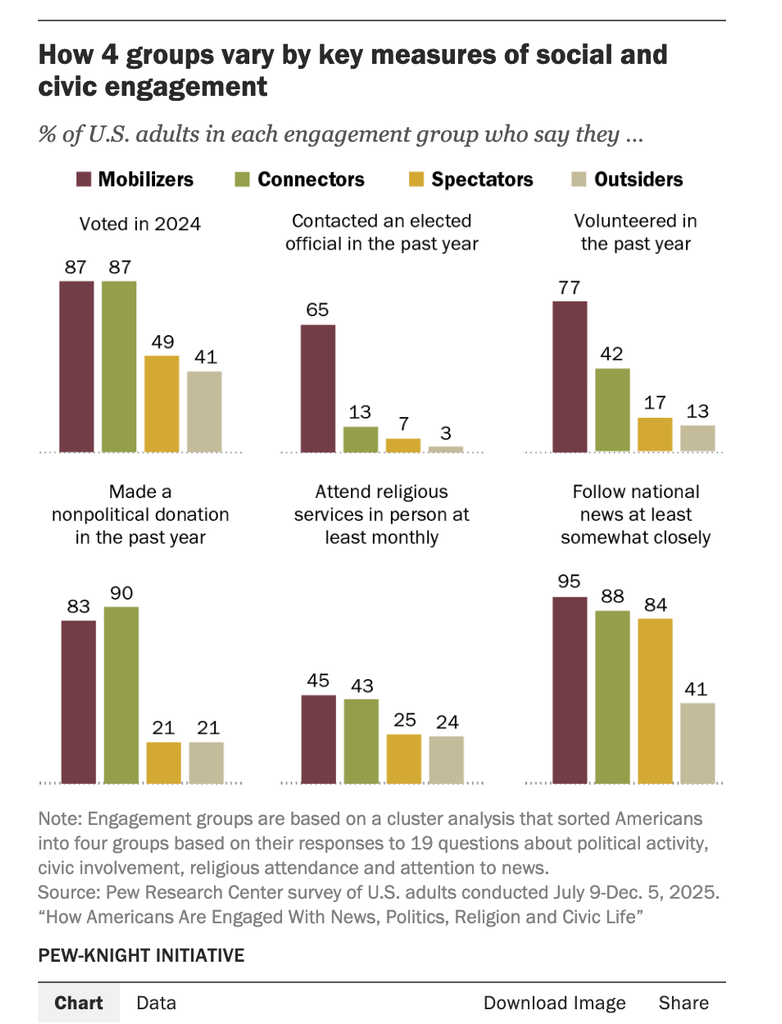
Going forward, this continued Democratic advantage with the civically engaged will play a huge role in both the 2028 primaries. Whichever candidate can dominate this cohort while holding onto enough votes elsewhere will likely win the presidential primary. If you’re a politician who has already become very familiar to Democrat donors like AOC or Ossoff, you aren’t going to have as much trouble convincing this bloc of voters.
About the Author