

In the 2024 election, something happened that hadn’t happened since 1976: every single state shifted in the same direction. Not only that, Kamala Harris failed to flip a single county in her direction, the first presidential loser *not* to do so since Herbert Hoover’s infamously doomed run in 1932. This level of nationalization was something that political analysts were not used to; the United States is an infamously regionalized and localized polity (“all politics is local!”).
One of the biggest questions going into tomorrow is whether nationalization or regionalism will prevail. While some have called it shades of the “anti-incumbent wave”, it’s entirely possible that we are also seeing regions and localities take up their own local gripes and punish everyone they can see. Or maybe not. Can that really be possible in an age where people are so divided, and Americans adopt political tribes with religious fervor? Perhaps the new politics of social media has led to an even more nationalized country, and everyone will vote in accordance with their national partisan allegiances outside of a few odd cases.
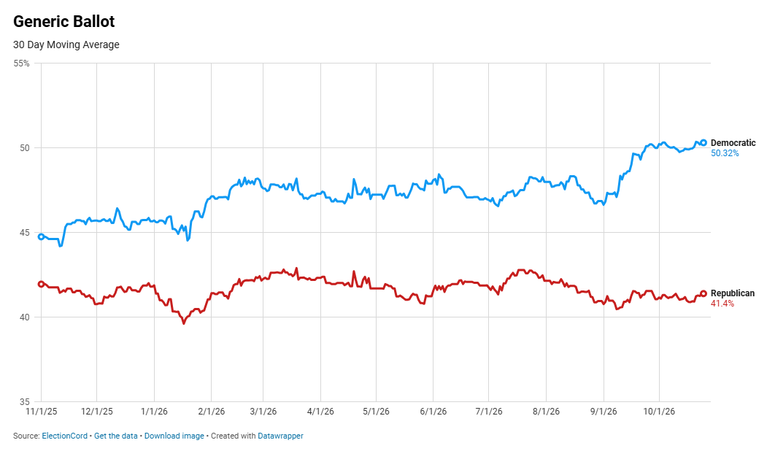
Of course, the polling evidence to date in this cycle suggests that US regionalism and localism has been revved up to an absurd degree, not to a level seen since before Trump descended down the escalator in 2015. For as much as this election has been about Trump, our consensus 54-46 Senate map (or Crystal Ball’s 53-47) looks nothing like any of the previous elections, or even the last Trump midterm in 2018.
Our House ratings are a little less regionalized, but this is largely diluted by gerrymandering; we are still seeing enormous swings in certain areas, and even have some seemingly absurd reach seats in areas that Democrats have not when in decades. Once again, we have largely agreed with experts and expect Democrats to win . However, the seat-by-seat map might surprise you all, so take a look.
What happened? Is this evidence just the typical red state/blue state polling error? Yes, to an extent, but Democrats are leading by enough to break out of the system even on a decent night (flipping just 2 of the 5 reach seats in AK/IA/KS/OH/TX and getting ME/NC/GA). The fact that Georgia and North Carolina, two states that Democrats have coveted for a decade, are set to be Safe Democratic landslides is a feat in and ot itself. Other swing state governorships like Michigan, Wisconsin, and Pennsylvania look like walks. Kansas? Iowa? South Carolina??? How could this be without significant local problems? Even a 3-5 point polling miss would still deliver us regional variances that make no real sense with our pre-2026 priors.
The case for the return of regionalism is quite clear in the polling. In two regions Democrats have struggled in for the last decade due to education polarization and White/Black racial polarization, the Democrats are poised to make massive gains due to skyrocketing turnout from Black voters, and some genuine persuasion or differential turnout gains among Southern Whites. Then there are Latino populations angry at the administration for a perceived poor economy and cruel immigration enforcement. Meanwhile, the deep-blue coastal areas, long-dominated by Democrats, are not seeing as large of a swing. In the Plains states, a burgeoning farm crisis caused by Trump’s tariffs and decades of sluggish Republican rule has led to a regionalized explosion in anger.
Or maybe that’s all nonsense, and the polling is wrong. Instead, we will be seeing another nationalized wave, with a more or less uniform wave breaking across the country into a blue wave year. No, Minnesota and New Hampshire won’t be close either, and California + the Northeast will all swing toward Dems. In this reality, how quickly we forget that Trump only won these “reach” states by the following margins:
| State | Margin (votes) | Margin (%) |
| North Carolina | 74,483 | 1.35% |
| Florida | 371,686 | 3.36% |
| Texas | 631,221 | 5.58% |
| Ohio | 475,669 | 8.03% |
| Iowa | 138,611 | 8.20% |
| Alaska | 36,173 | 10.06% |
| South Carolina | 293,562 | 11.68% |
| Kansas | 201,083 | 14.64% |
Swing those states 7-10% left? Add in a little candidate quality? That looks like the current map from this cycle. Indeed, the same Senate seats were up in 2020, save for Ohio and Florida, so we should have a lot of very interesting swing maps. Perhaps all politics is national now, and circumstances have hardly changed.
(The only true outlier in this case would be Florida, which has moved so dramatically away from Dems in the previous two cycles that it can scarcely be believed, and would now have to drunkenly move back in a very Floridian manner.)
So, which is it? Well, we are about to see. If we see some ridiculous swing maps in areas and massive blowouts that give Democrats a durable Senate majority, like the polls are saying? Perhaps we can say regionalism has returned, and the United States is returning to its days when almost every Senate seat in any region of the country was winnable by the other party. We can potentially end the Trump era, paradoxically, in a mirror of where we started it: with a lame-duck president reliant on low-propensity voters dealing with an opposition that has an ironclad control of Congress.
What are we to make of the political world then? So many words have been tossed around about the unbridgeable, unfathomable, implacable differences between Red America and Blue America. So many diners have been visited, so many voters have been interviewed, and so many hot takes about people we don’t know have been thrown into the ether. But the truth is, the true “vibes” of a nation are incomprehensible and unknowable. Maybe some people in Iowa really are the median voter that everyone complains about, just as fickle and bitter as ever. And the Democrats in those areas, after seeing local devastation wreaked by Republicans, are even more angry.
In the end, this regional theory would show “People are People”. Perhaps you may find it unseemly that they would need their personal finances impacted to finally understand that Donald Trump and the Republicans need to be punished, but it does happen. What are we supposed to do about it anyhow, aside from lecturing? The right to choose the Senator of Texas is the right of Texans alone, and as long as we remain this bizarre federal republic, it shall be forevermore.
And as for the coasts, where people have been protected by powerful blue states with significant financial resources? Maybe they are checking out a bit too, and not really as motivated with the 10th year of being The Resistance, and also more focused on local problems. After all, these states are richer and more educated, and their status as absurdly blue strongholds was only cemented by Trump’s victory in 2016, not necessarily something that was a political inevitability beforehand. After all, many blue states have been relatively shifting right, even during the 2020 election.
Or maybe that’s all wrong, and the polls are going to be a little wrong. Instead, the Democrat vs. Republican divide, which has destroyed red-state and blue-state Senators from opposite parties for the last decade, will simply recur again. The blue states, far from being tired of eternal Democratic rule, will simply snap back to “normal” from their 2024 lows and power most Democratic gains. The red state Senate seats were always competitive at a baseline anyway (well, except for Florida): Georgia, North Carolina, Texas, Iowa, Ohio, and Alaska were never that far off during the recent memory either. Heck, Obama won North Carolina once, Iowa twice, Ohio twice, and managed to swing Georgia and Alaska to the left of the nation. In a blue wave, sure that’s all winnable, although Democrats would certainly miss out on a few of these Trump-won states as partisanship kicks in.
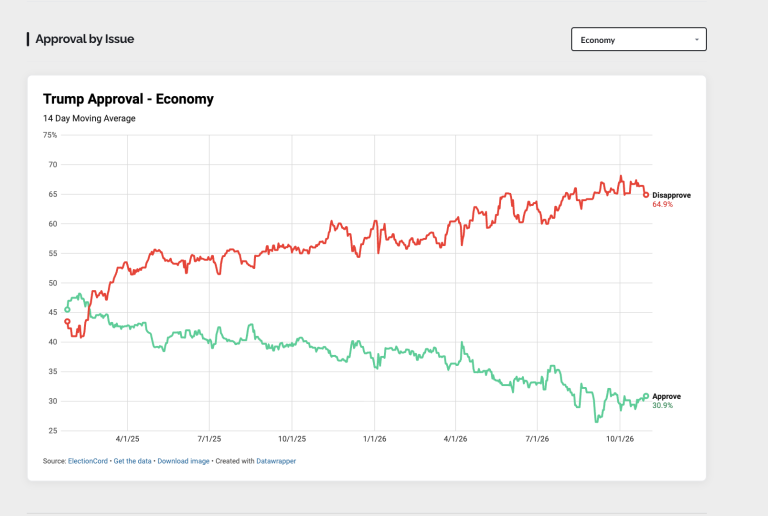
There is a secret third thing: what if Trump and this administration have pissed off so many localities and individual people that it has snowballed into something much larger? We’re not talking about big policies, so to speak; we’re just talking about incredibly stupid and aggravating slights and humiliations that demoralize supporters and convert the previously unwilling. This would mean he’s done something individually so annoying, cruel, or misguided to so many people, across so many parts of the country, that it’s become utterly unbearable?
And in the age of social media, we’ve all simply magnified our ability to feel pissed off, leading to these enormous bouts of thermostatic opinion differences? Whether you got DOGE’d, couldn’t find a job, had a friend mistreated or injured by ICE, or had to skimp out on your new haircut to pay for gas, all that plays on the news is The Trump Show. Maybe you are mad that the Orange Man tried to mine on the Boundary Waters, demanded a data center be built in your backyard, bulldozed your national park, or forced you to pay an extra $50 in tariffs while buying toys. And if your local Republican is letting him do it? Time to vote blue, no matter who.
The attention span of the U.S. public gets shorter by the day. Forget “are you better off than you were four years ago?” I’m not better off than I was 4 months ago! What we will see tomorrow is just how many people Trump pissed off in a given location over the last two years, and none of it means anything grand and sweeping for the long course of American history. In this telling, as Dan Guild wrote in Crystal Ball yesterday, the critical number is “how many people strongly disapprove of Trump in your state?” Is it a lot? Well, you are about to have a blue wave, buddy. Is it not as bad? Well, maybe the blue tsunami will be a blue ripple.
This would be by far the funniest outcome, but it would also leave us very little insight into the social condition of the country, so, therefore, it is the most likely of the three.
We shall see! At the very least, I can guarantee you that Election Night will be interesting, because it always is. American politics remains the preeminent reality television show and geopolitical event of the year, so get out your popcorn…you’ll love this next part.
About the Author