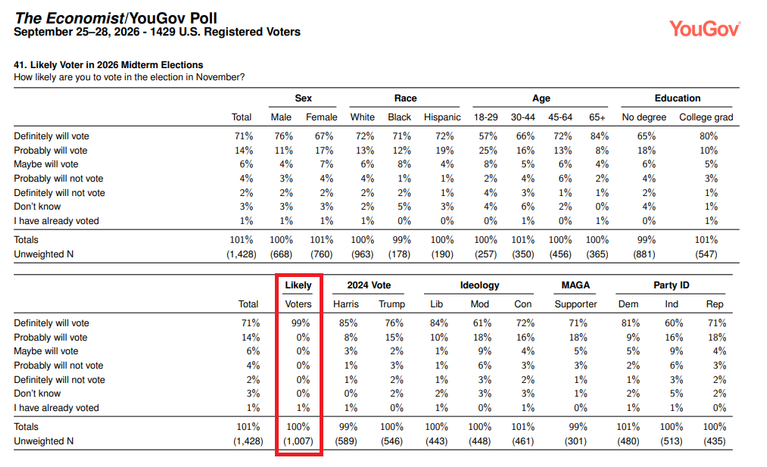


The midterms are less than a month away. At ElectionCord, we’ve spent most of the year prepping for this November, and we simultaneously know more than ever before. Polls are congregating around the generic ballot prediction, the final ads are being placed, and over 1 million Americans have already cast their ballots.
If it’s felt like a long time since we started, that’s because it has. Americans spend an inordinate amount of time in campaign mode. Many campaigns for Senate began in early 2025, and fundraising is a year-round exercise, though the number of spam texts and emails has been multiplying down the final stretch.
Where are we at? Well, the ElectionCord polling averages and our new GIGAMODEL average tell a similar story: the Democrats are in a very strong position. Our generic ballot sits at a new high of D+8.7, matching other outlets.
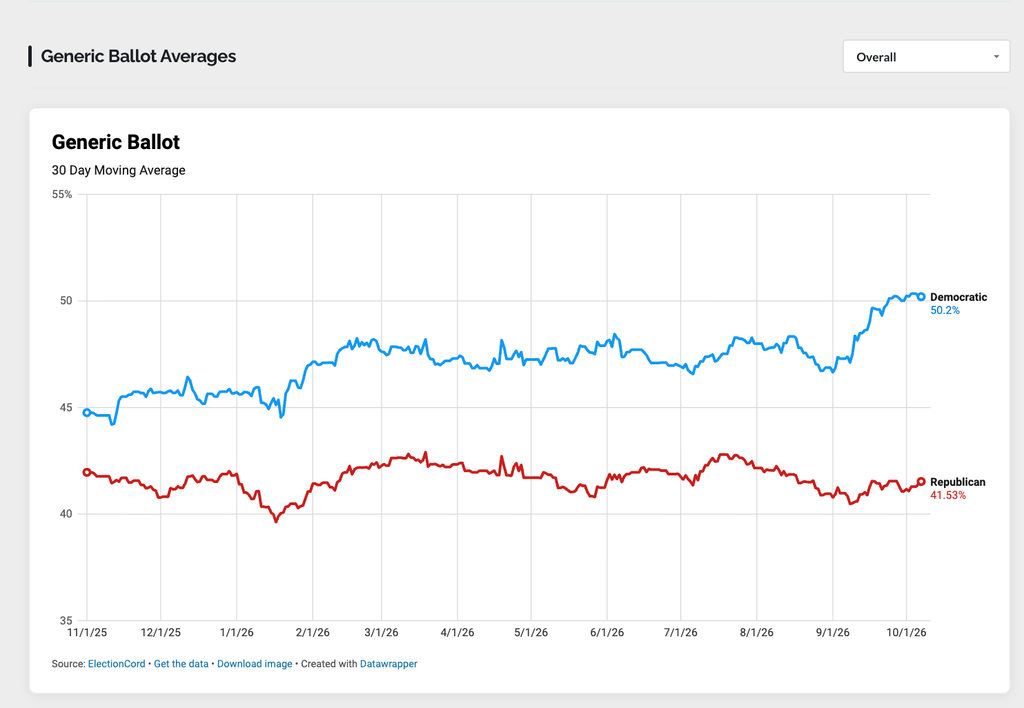
Despite a wave of Republican ad spending, little has been able to shake up the midterm political environment from one well-chronicled effect: the midterm environment is set by presidential approval.
And wow, Trump’s approval rating is not very good. It doesn’t matter what average you use, the overall trend is an approval rating somewhere between -21% and -25%. On our issue tracker, he is underwater on everything, with the economy and inflation (the nation’s top priority by an overwhelming margin) lowest of all.
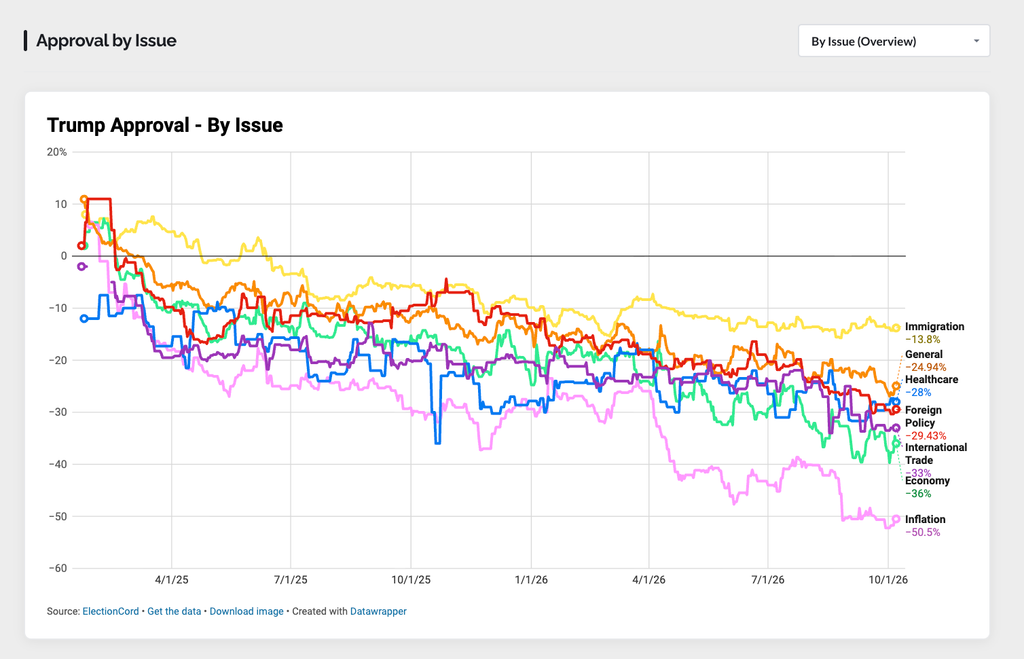
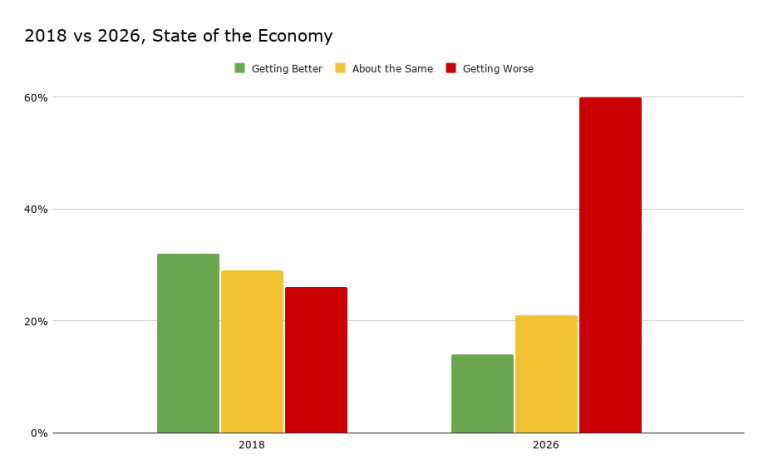
This has led to some major shifts across the country. Trump’s approval is markedly lower than it was in 2018, and is among the lowest of any president in US history. To most people, this is going to be the main theme of the midterms in federal races. On the most recent D+9 Cygnal poll, more than half of Democratic voters said they are voting to opposite Trump than to support Democrats. This held true whether you were a “swing voter” or a committed 2024 Harris partisan.
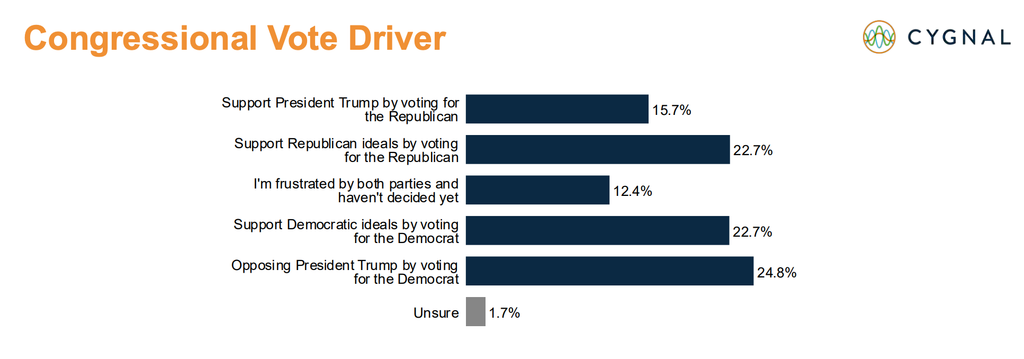
So, case closed? Not so fast. We haven’t even gotten to our pre-conceived narratives!
Anti-chaos or anti-incumbency?
There are two strains of thought for what’s happening in polling for the midterms. One is quite simple: people hate the Trump administration and want to install Democrats at every level to put a stop to the chaos. This was a common refrain during Trump’s first term, and in many ways the environment looks like 2018, where Democrats made huge persuasion gains across red states, rural areas, and suburbs.
In this telling, the anger about the economy and a host of other issues are really expressions of discontent with Trump himself. Indeed, despite higher gas prices, inflation, jobs, GDP growth, and other economic data aren’t as terrible as voters seem to be arguing. For example, while inflation is higher than the pre-2020 baseline, inflation has been roughly flat since 2024.
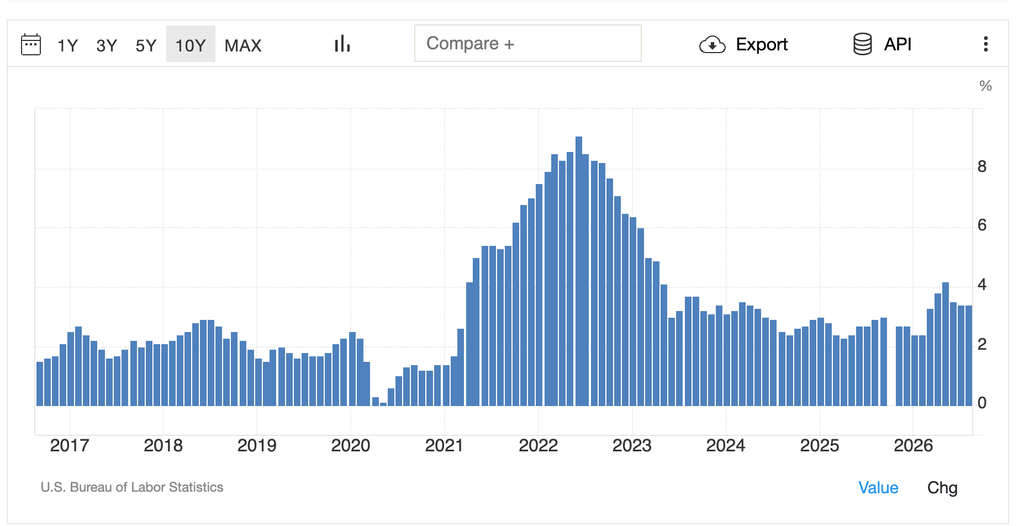
But that doesn’t matter: for one, voters seem to think inflation is a problem when prices rise whatsoever, rather than obsessively tracking the rate of change. And if things are expensive, their lives are bad, it’s Trump and the Republicans’ fault, so it’s time to crawl over broken glass to vote against them.
On the other side, we see deep frustration with incumbent governments across the board. Take states as different as New York and Utah, where both incumbent governors are net unpopular despite being safe for their respective parties at all. This seems to be irrelevant to Trump, in Utah, Gov. Spencer Cox’s approval is even worse than the president’s! Meanwhile, New York Gov. Kathy Hochul is underwater despite Trump also being above 60% disapproval. So, at some level, voters are able to disentangle federal and state government officials.
The contours of these trends could lead to some odd results, as we typically see in midterms.
As a quick example, here is the 2020 presidential election to 2022 gubernatorial election results by county. You can see huge candidate quality and local swings, depending on the individual race. Don’t discount completely bizarre results relative to 2024’s presidential numbers.
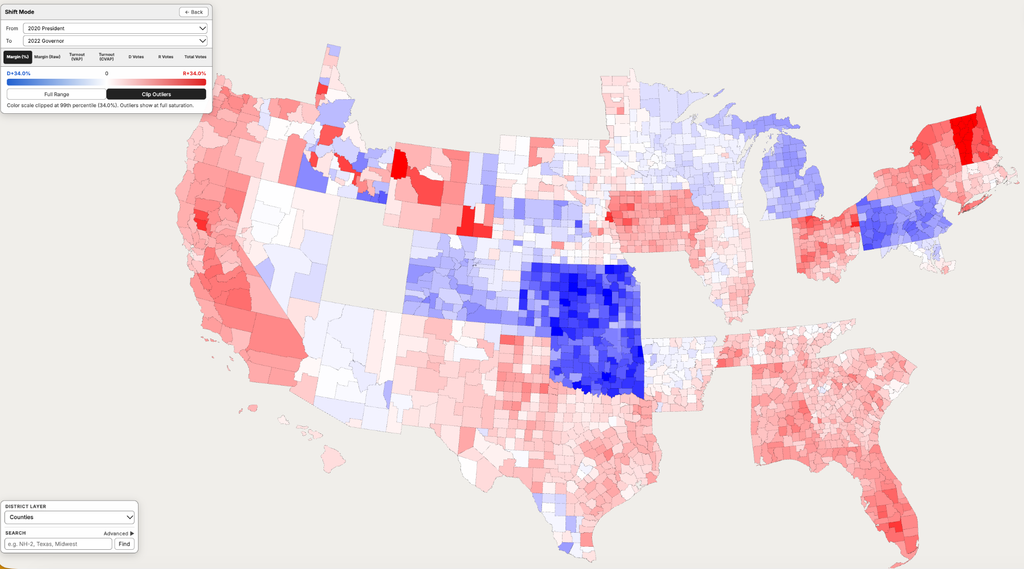
However, it’s interesting that the thesis appears to be anti-incumbency, which does buck against a lot of what we’ve seen in previous midterms. Above, you can see that several incumbents, Democrat or Republican, dramatically outperformed expectations. In 2026, an anti-incumbent wave would mean many incumbents see a large erosion of their support. Of course, anti-incumbency also extends to Trump, who has dominated American political life for the last decade and is clearly causing serious fatigue.
The evidence for that is mixed. In polls, we have seen several incumbent governors or parties trying to replace incumbent governors they hold struggle badly relative to the national environment. In no particular order, that would cover: Oregon, New York, Ohio, Iowa, California, Nebraska, Texas, and Minnesota.
However, those states are counterbalanced by areas where incumbents are doing just fine, like Pennsylvania, Colorado, New Hampshire, and Illinois. Both of these can be true simultaneously. Anti-incumbency could still be motivating Republicans to show up and dampening Dem persuasion gains. Or we could be seeing a “throw the bums out” election at the federal level, while state and local officials can survive based on how well they are governing.
In red states, perhaps we are seeing a doubling of the effect: Democrats and left-leaning independents want to punish Trump, while Republicans are getting tired of the same old politicians. In blue states, perhaps we are seeing Democratic turnout from those motivated to crush Trump, but persuasion gains are muted among everyone else.
Or this is all meaningless. At the end of the day, I’d say the unifying thread between both is “how you govern matters”. If you have a terrible communication style, take needlessly extremist policy positions, or preside over austerity or economic difficulties, you will pay a penalty. In Trump’s case, he’s doing all of the above. Not to take too much of a page from the UK, but we’ve seen that simply replacing one leader (Keir Starmer) with one who can deliver a good speech and some new ideas (Andy Burnham) has led to Labour magically recovering most of its voters. Even in this age of hyperpolitics and hyperpolarization, we shouldn’t underestimate basic political truisms like “don’t get buried in scandal” or “try not to be corrupt”.
Gen Z’s Money Problems
The economy remains the top issue for most voters. As we’ve covered, that does largely relate to partisans blindly hating the other side as soon as they don’t have the presidency.
But there remains a swathe of swing voters who genuinely seem to care about the economy: young people. In an interesting twist to the 2010s, where older voters cared about the economy and younger voters opted for social issues or healthcare, the economy-driven tend to be some of the youngest voters in the political universe. These factors are intrinsically tied to the crosstabs in polling, where we see Republicans are losing the most ground with young people. It doesn’t matter if you’re reading Pew, Cygnal, or The Argument: young people are pissed the freak off, man.
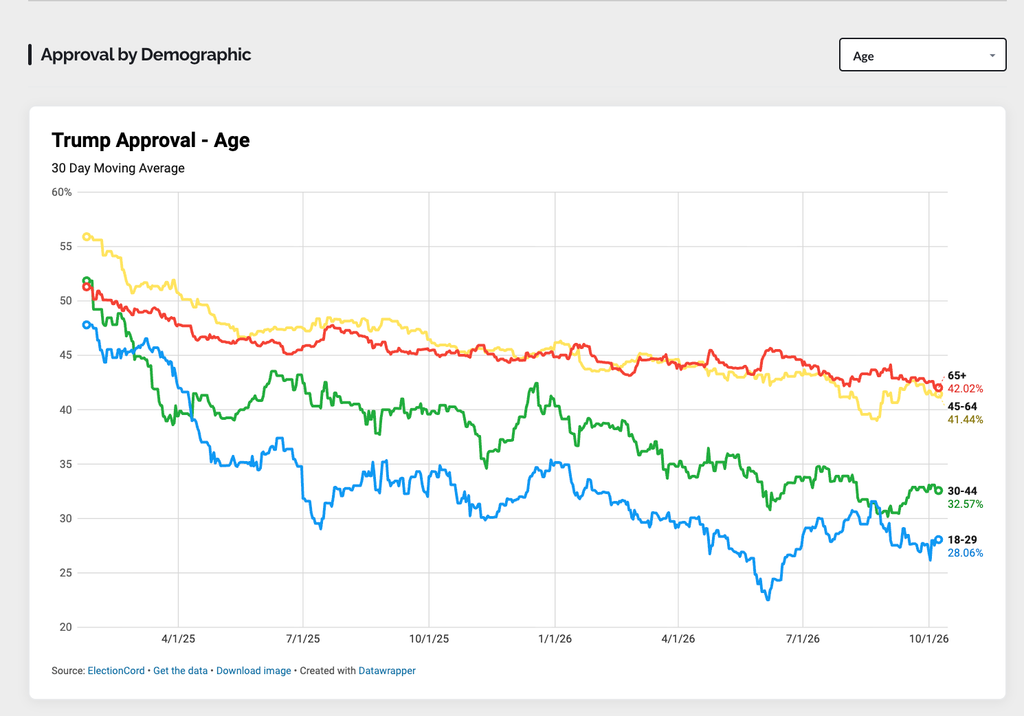
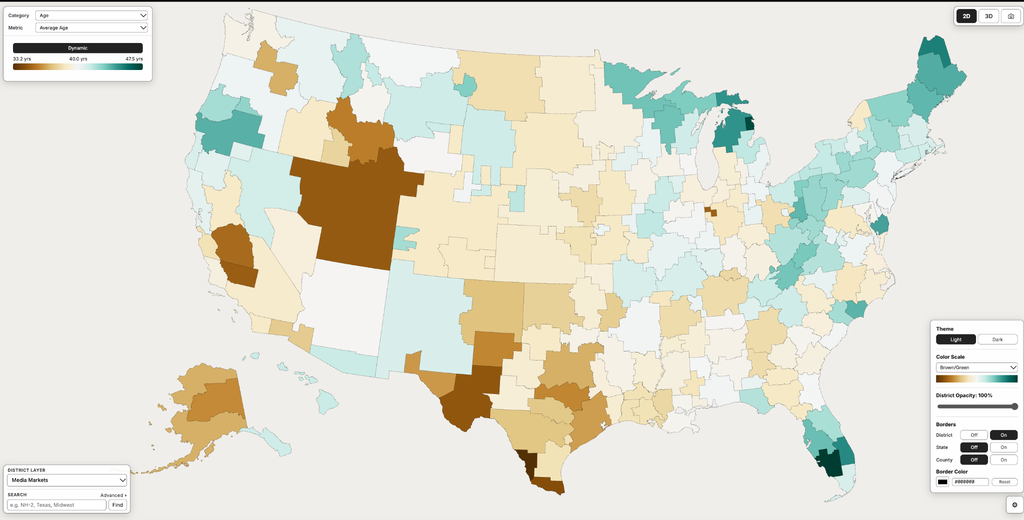
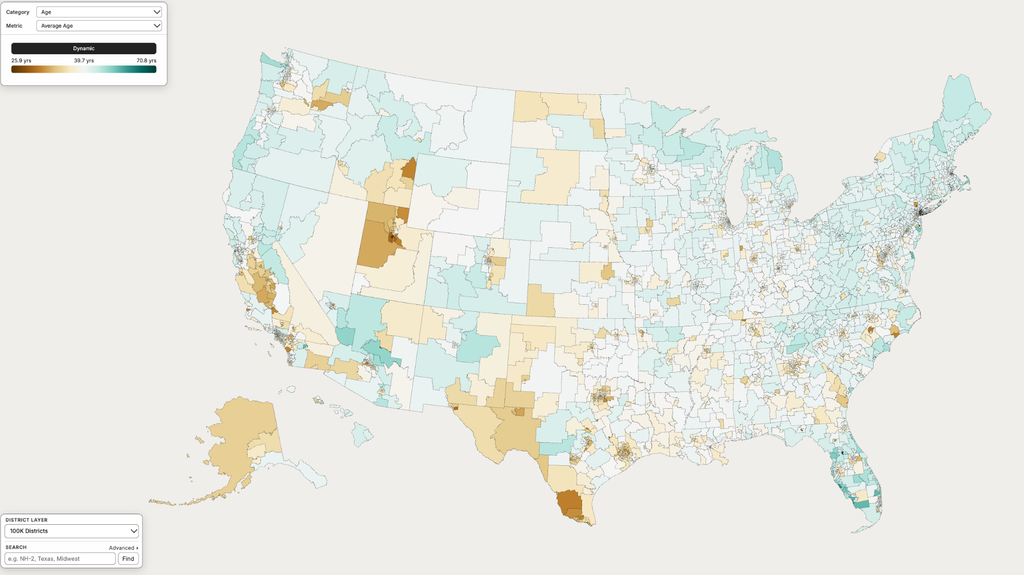
In our granular polling aggregation, we see this effect clearly: Trump has lost the most support among the 18-29 age group, followed by 30-44. Democrats have made massive gains in generic ballot polling among young people, and it’s reverberated across the political landscape. Why else are we seeing some of the youngest states like Alaska and Texas suddenly lurch left, while older areas like New England have muted swings? Perhaps the relatively limited movements in Michigan, Wisconsin, and Minnesota have something to do with age as well, while younger Southern states have moved solidly toward Dems this cycle.
Here we have several maps of the US by average age using our Genus tool.
Media Markets
100K Districts
States
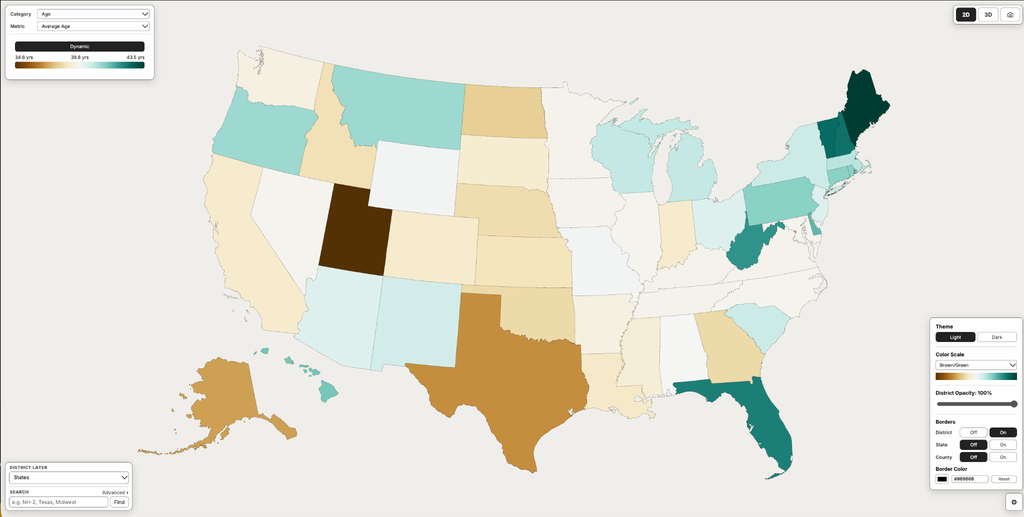
Honestly, this vaguely looks similar to where we’ve seen amazing polling for Democrats and where polling has lagged, right down to Oregon being bizarrely awful.
This shouldn’t be a huge surprise when, according to the latest NYT/Siena poll, 91% of 18-29 rate economic conditions as “fair or poor”. By default, that would have to include most Republican young people.
Trump’s approval on the economy among young people? A solid -61.
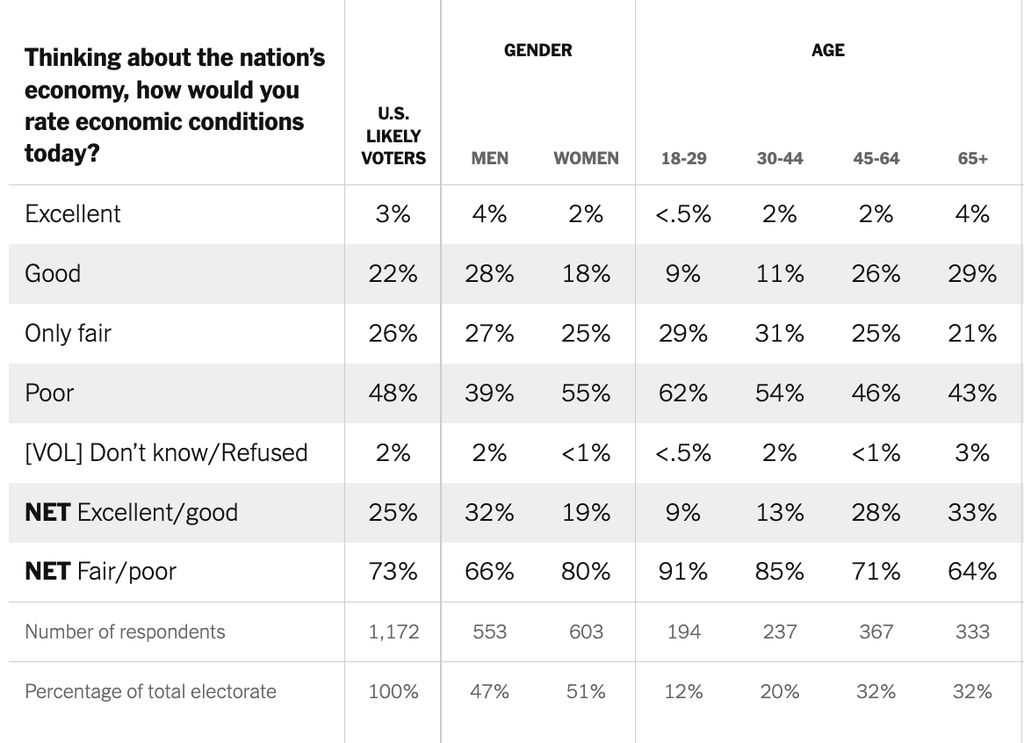
So, if young people continue to rate the economy and cost-of-living as their top issue, numbers this poor would likely lead to a steep erosion in support.
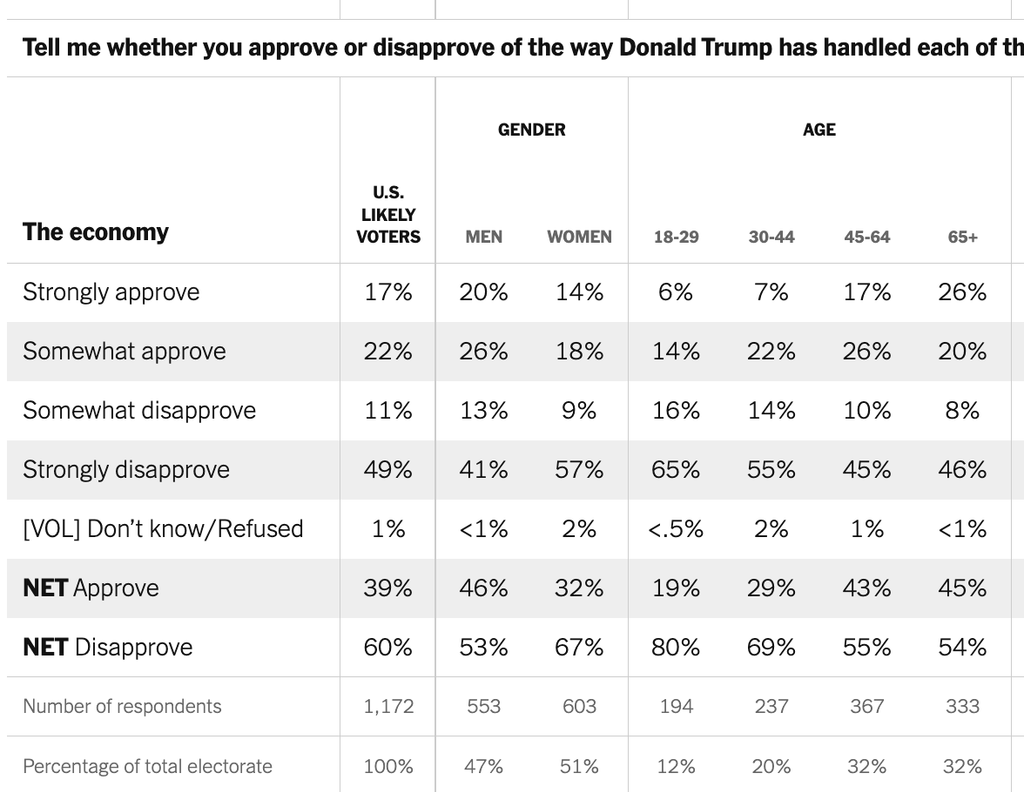
Meanwhile, if Republicans are holding up slightly better with old people, we can expect them to do better in older regions. Indeed, since midterms are guaranteed to be an older affair than general elections, the Republicans would probably be doing even worse as turnout goes up.
This trend hasn’t even been limited to the United States. Across the world, various anti-incumbent waves are being driven by young people. Whether you’re in France, Germany, India, or Indonesia, the youth seem to be very upset about their lot in life. It’s important to note that they are specifically demanding a fairer economic deal, and they don’t particularly care if that comes through the far-right or the far-left. In a two-party system like the United States, they have no option but to swing wildly between the two parties. Thus, Democrats have now rebuilt their advantage with young voters via persuasion/turnout.
About the Author